


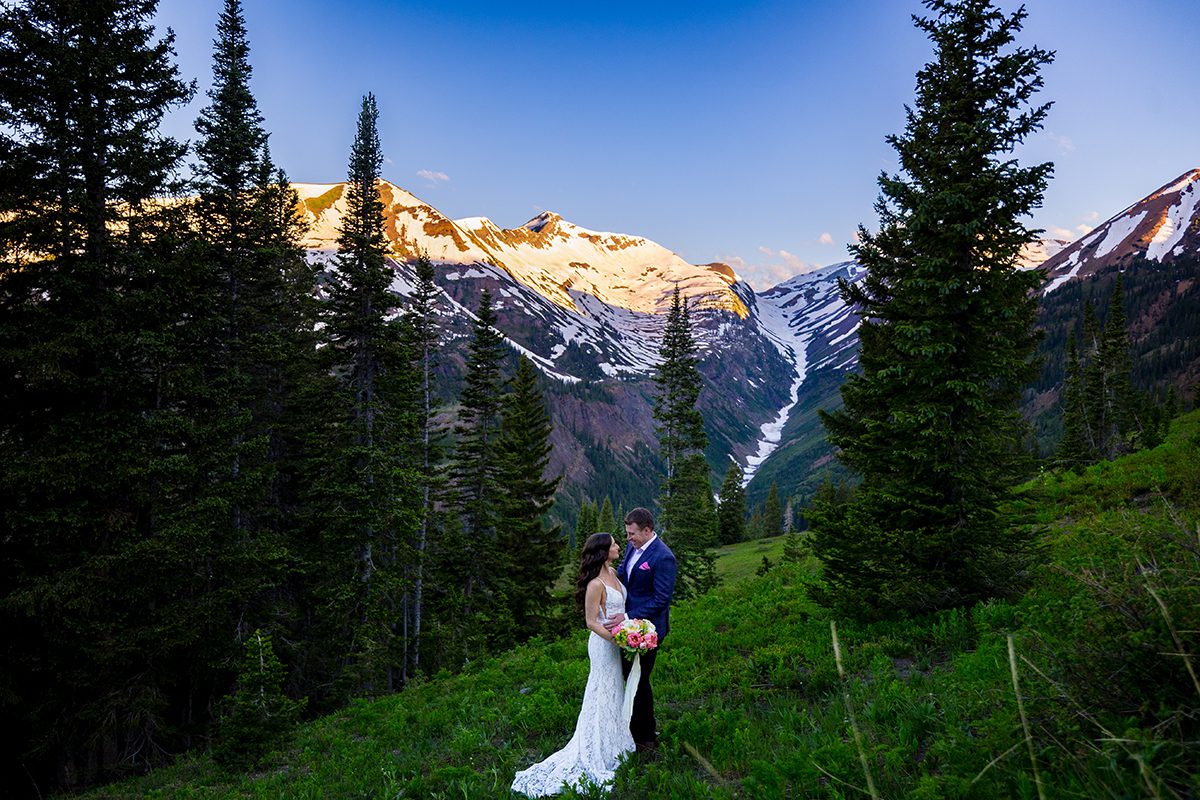
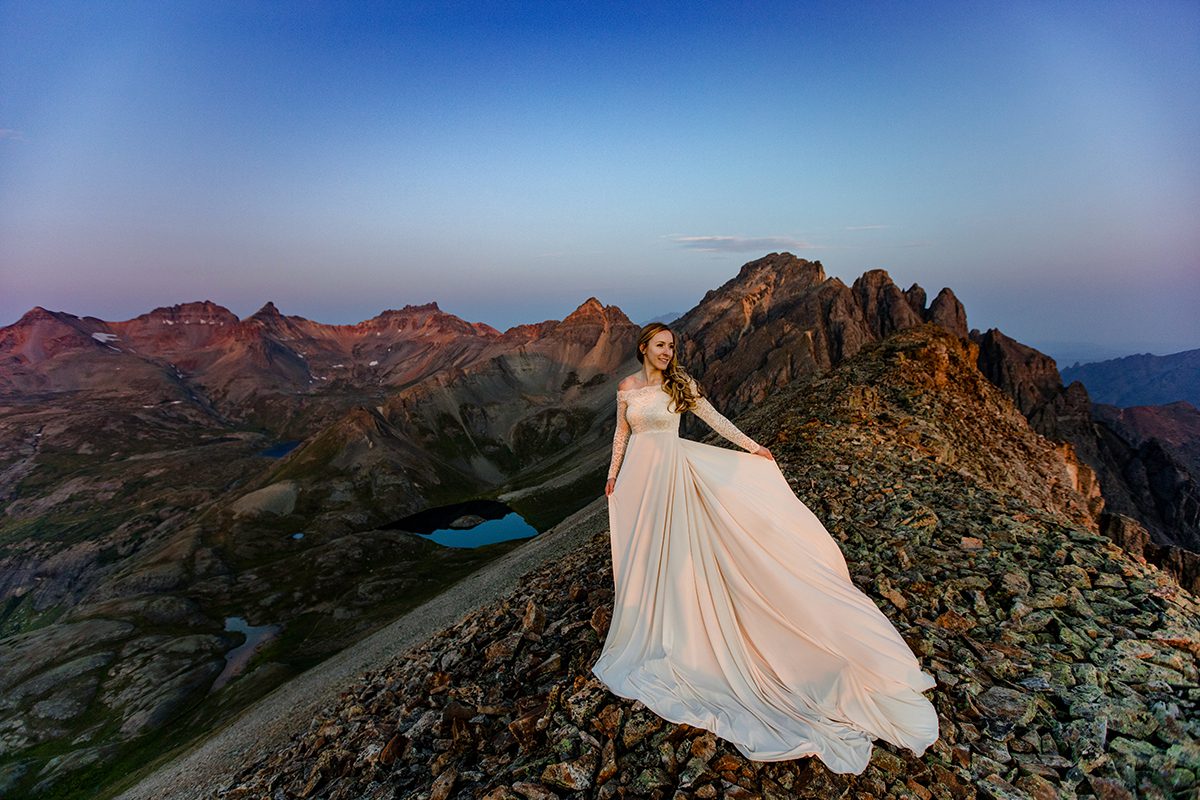
There’s no feeling quite like standing on the tippy top of a mountain – looking back over the never ending alpine valleys and sea of surrounding peaks. Luckily, there’s no shortage of fantastic peaks here in Colorado.
Eloping on a Mountain top requires a little more adventure, and a little more planning.
Whether you envision a sunrise ceremony above the clouds, or that rare golden-hour vow exchange at 14,000 feet, here’s my tips and tricks as a Colorado adventure elopement photographer to help you plan your perfect Mountain Top wedding day.
My Credentials:
You can find me hiking Colorado’s peaks throughout most of the year here in Colorado. I’ve hiked 14ers in all seasons (yes, even those crazy type 2 winter summits), and up to class 4 – all with camera gear included. I’ve helped couples plan adventure elopements on the top of mountain summits since 2019, and I must say they’re some of my favorite days out in the mountains. Over the past few years, I’ve focused on dialing in my training and nutrition, and am happy to give my advice if you’re wanting to prepare for your hiking elopement.
Choosing the Perfect Mountain For You
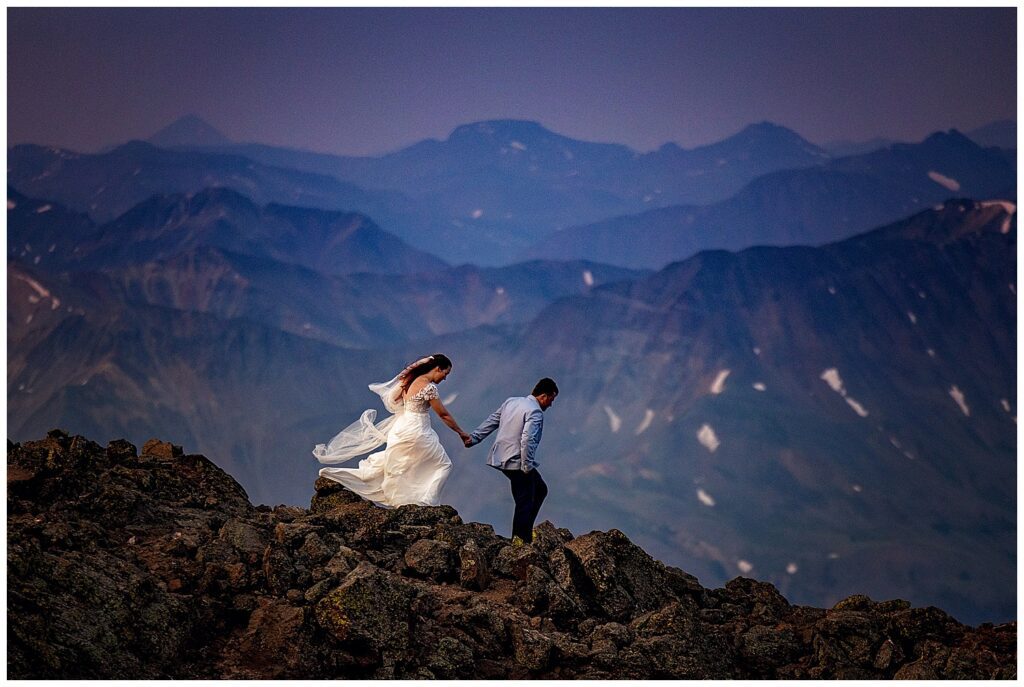
Summit of Uncompaghre at Sunrise during August, 14,308′
Not all mountains are created equal. Sometimes, the highest peak is one of the easiest to get to while a lower peak is quite technical. When considering the mountain that you’ll be eloping on, keep the following in mind.
Skill Level
What are you currently comfortable with?
Your wedding day is NOT the day to take on new terrain or level up your hiking game. What terrain, grade, and length are you currently comfortable hiking? Have you been hiking recently and are dialed in for a super long trail? Is a shorter and easier peak a better option? Just come back from Everest and ready for it all? 🤠
No matter what level you’re currently at, there’s a peak here in Colorado perfect for you. I just highly recommend keeping your elopement day hike within your current comfort zone for the best experience possible.
Accessibility
Is a 4×4 required to reach the trailhead? Can you fly into Denver, or does a regional airport make more sense? Is the Trailhead seasonal? What about parking reservations and permits? I’m happy to help answer these questions as our trail system and wedding permitting can get tricky.
Some peaks are, unfortunately off limits to elopements and not accessible to host your wedding at. Longs Peak (and all peaks inside RMNP) are on the top of the requested list that are unaccessible for elopements.
Season and Weather
It’s well known that Colorado has volatile weather and seasons. Weather at 13,000-14,000 feet is even crazier. Many high peaks are true winter ascents until Mid-June (or possibly later depending on the peak and our snowpack). Some trails tend to dry out faster, such as South facing trails, while others hold snow well past when you’d expect.
If a shoulder season summit wedding is in your plans, look at peaks with well established winter routes or well traveled trails that avoid avalanche terrain.
Views and Privacy
Do you want the summit to yourself? Have a specific view in mind? This is where I say my personal (likely unpopular) opinion: 13,000 foot peaks are where it’s at. They have amazing views and you’re likely to have the entire peak to yourself as they’re no where near as crowded as nearby 14ers.
Make a list of what your priorities are – and find a peak that best suits the vibes and views you’re wanting to have on your wedding day.
Colorado’s Mountain Summit Regions
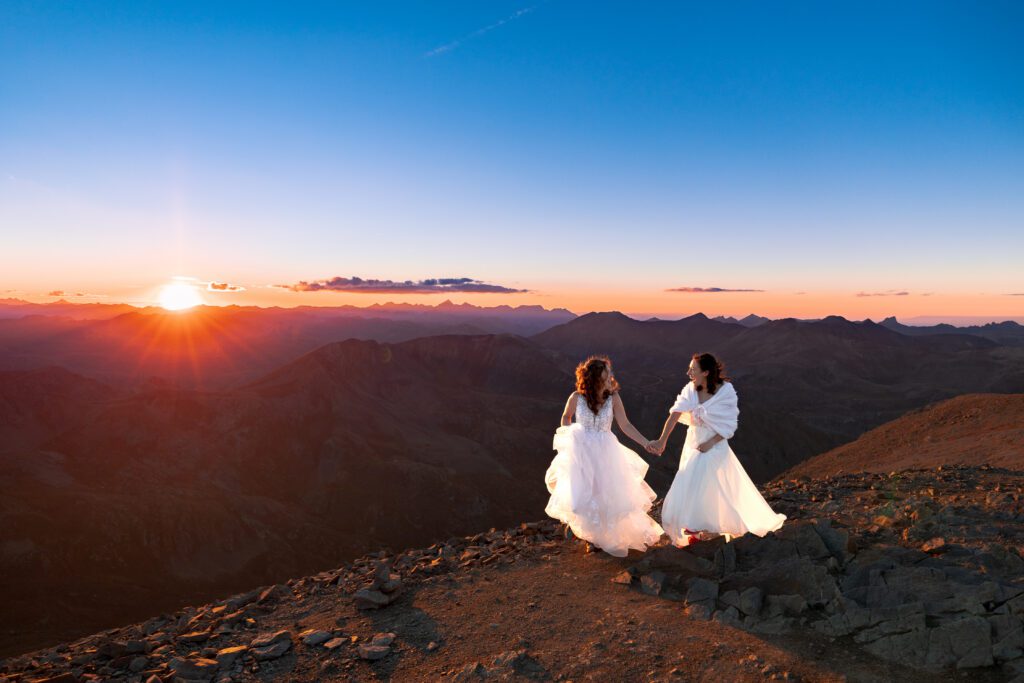
Summit of Handies Peak, Sunset in September
The San Juans: A Volcanic Hikers Paradise
Located in Southwestern Colorado, the San Juans are tucked between old mining areas and smaller mountain towns. The peaks here are jagged and dramatic, lakes are a stunning shade of teal, and the number of peaks to climb is endless.
Closest Towns to the San Juan Mountains:
Ouray, Telluride, Silverton, Durango, Lake City, and Ridgway.
Accessibility:
There are peaks here of all levels. Some require a 4×4 road to access the trailhead, others are right off roads everyone can reach. If you’re looking for a truly remote experience, the peaks located in the Weminuche Wilderness are accessible via. an incredibly long hike in/backpacking experience or taking a specific train route and then hiking many miles to camp.
What Peaks are in the Area:
Many well known 14ers are in the San Juan mountains.
• Easily Accessible and Class 2/Walk Up: Handies Peak, Redcloud and Sunshine Peaks
• Accessible via. 4×4 Road and Class 2+/3: Uncompaghre, Wetterhorn, and Sneffels
• There are also many Class 3/4 peaks that are more intense for those seeking a more experienced adventure.
There are countless summits of 12,000 and 13,000 in the area as well. These are some of my very favorite peaks as the views are absolutely incredible and the crowds are much thinner than on the more well known 14er routes. Some are easy jaunts up to a flat and wide summit while others require massive undertaking and roping up. A few of the more well known peaks in the area include V2, Ohio Peak, Ajax, Sultan, and Telluride Peak.
What couples are best suited for a peak in the San Juans?
If you’re looking for insane views at the top that likely require a little more planning than other areas in the state, the San Juan Mountains are for you. The drive to the area is AT LEAST 6 hours from Denver – you can fly into Montrose, Gunnison, Telluride, or Durango to cut the drive down. Many trailheads do require a good drive from town on old mining roads. There is no where else in Colorado like the San Juans – the volcanic nature of all the rock formations and lakes give this area an other-worldly feel.
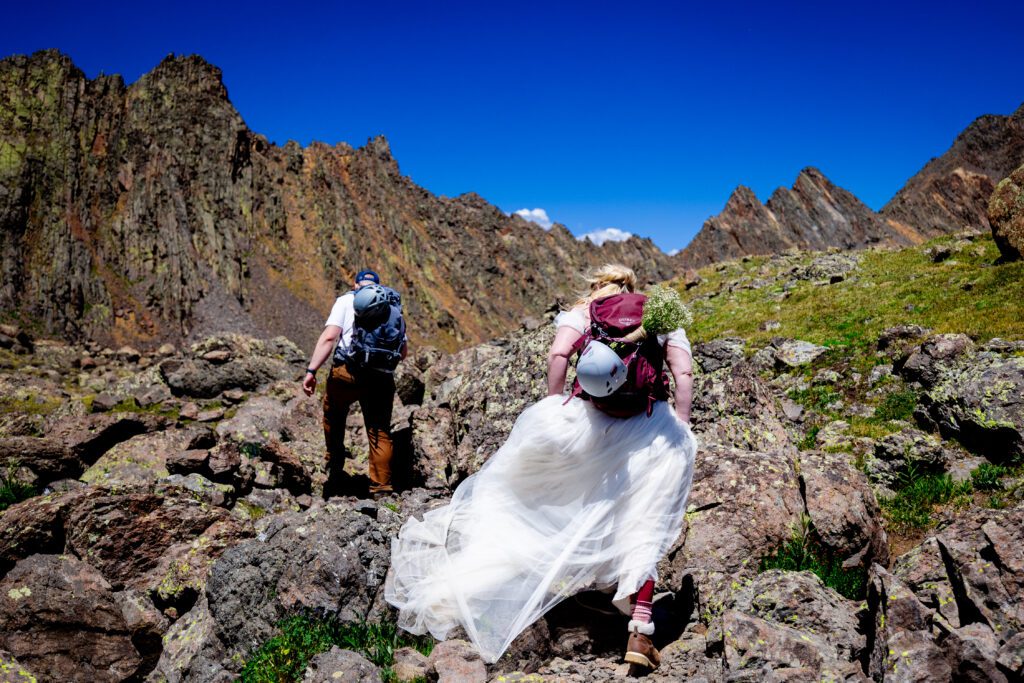
Heading up Wetterhorn, a Class 3 14er
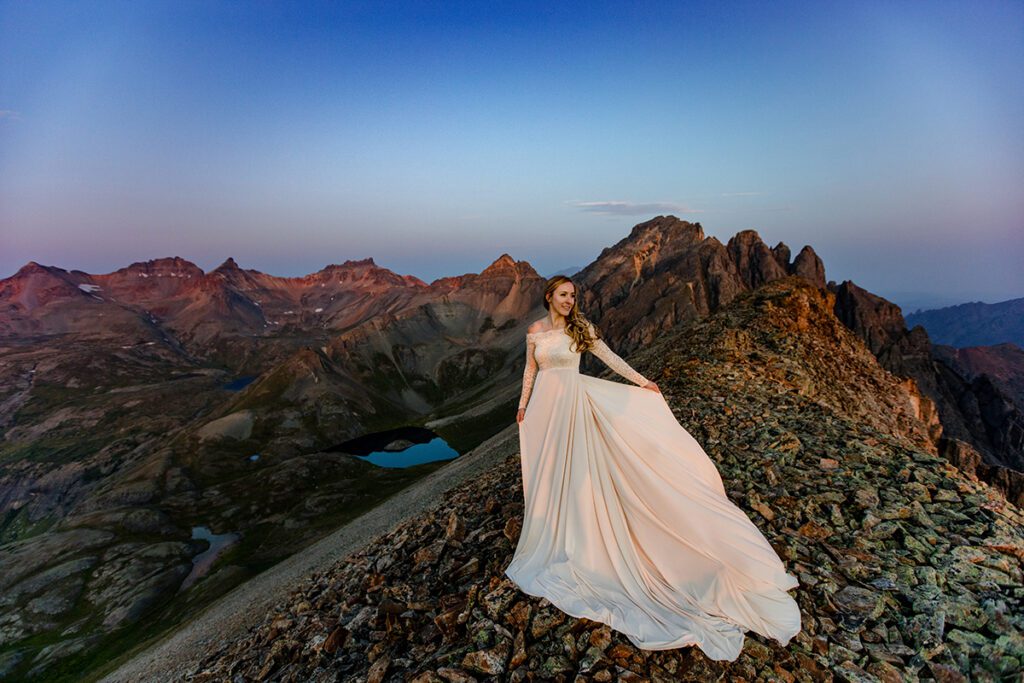
The Summit of V2, a Class 2 13er
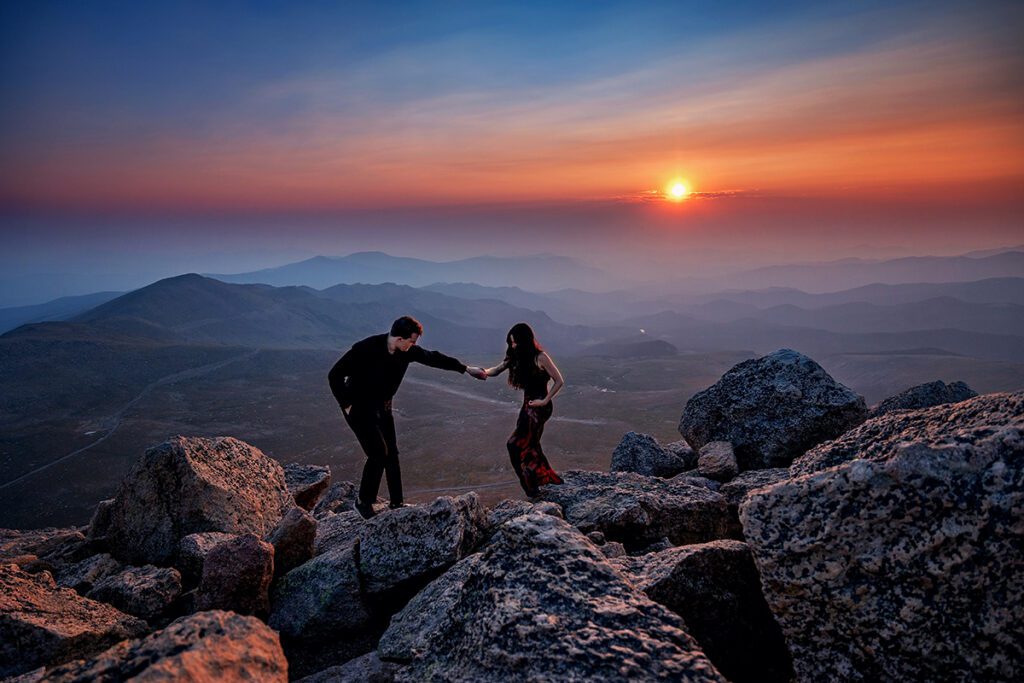
The Summit of Mt. Blue Sky in August
The Front Range: Easy Access and Great Views
Close to the Denver Metro area, the Front Range does indeed have some absolutely stunning views without the massive undertaking of a long mountainous drive into the backcountry.
Accessibility:
With easiest peaks to access from the Denver area, the front range may surprise you. Many high peaks can be accessed right off the highway or a major road without the need for a 4×4 vehicle. Some peaks that are a little less high-traffic may require a longer drive or a 4×4. One thing of note: some peaks in the Front Range may require a parking permit, reservation, or may not allow weddings. One notable peak that gets crowded and requires advanced planning to obtain a parking pass is Quandary Peak near Breckenridge, while Longs Peak in Rocky Mountain National Park does not allow elopements of any size on the summit.
What Peaks are in the Area:
Some of the easier and more accessible 14ers are located in the Denver Metro Front Range – Grays Peak, Torreys Peak, Quandary Peak, and Mount Blue Sky are all Class 2 walk up peaks that with appropriate fitness levels are not overly difficult. Know that all these peaks get very crowded, especially on weekends and the parking lots fill up most mornings by 4-5am.
There are SO many wonderful, stunning 12,000 – 13,000 peaks near Denver that you’re likely to have the summit all to yourselves (and sometimes you can see the conga lines heading up the 14ers from the trail). While I won’t be publicly naming “Local’s Special” peaks on a public online forum, some of the more well known peaks in the area include: Sniktau, Grizzly Peak, Mt. Audubon, Mt. Flora, and James Peak. There are also a handful of peaks that can be accessed very easily via. 4×4 road – making the summit hike a shorter experience for couples looking for a little more chill on their elopement day.
What couples are best suited for an elopement along the Front Range?
With Denver being the easiest airport to fly into from most states/countries, if you’re looking for somewhere that doesn’t require long mountain drives and you have a lot of family coming that you’d like to include in your elopement I’d highly recommend looking at the Front Range. It’s the perfect location for a sunrise summit vow ceremony then meeting your family and friends at the Trailhead to have a celebration with your loved ones.
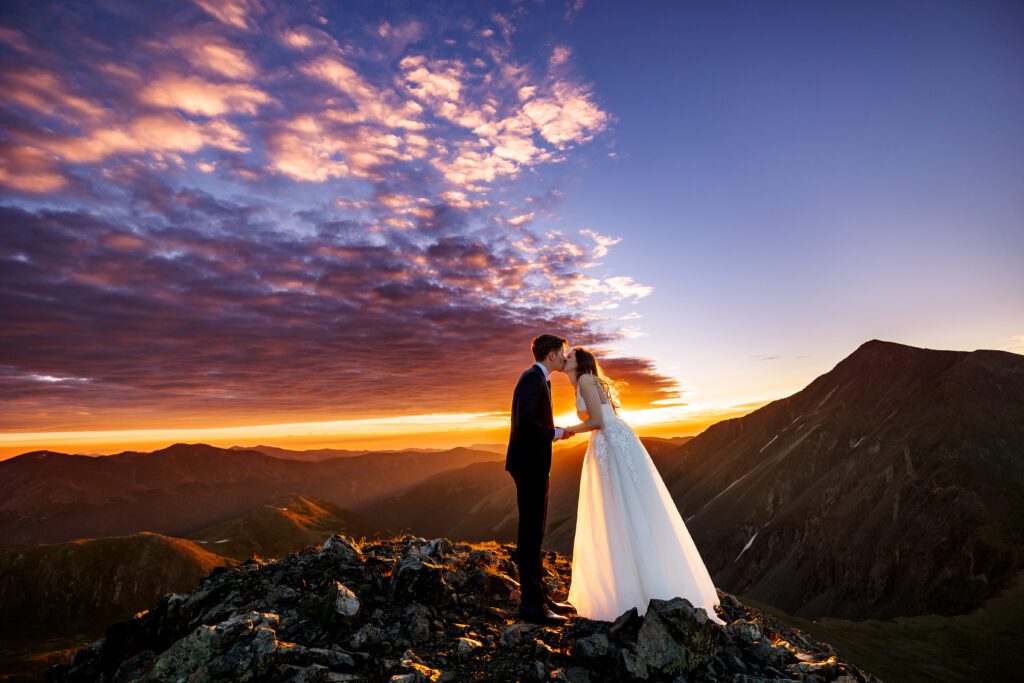
The summit of Grizzly Peak at Sunrise in August
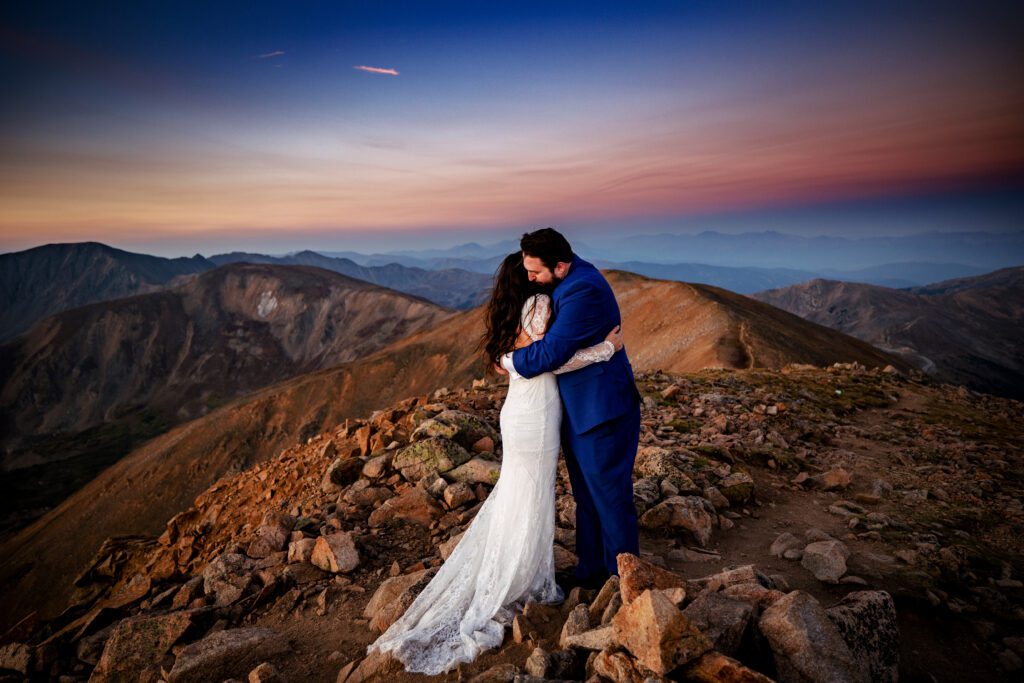
The summit of Sniktau at Sunrise in September
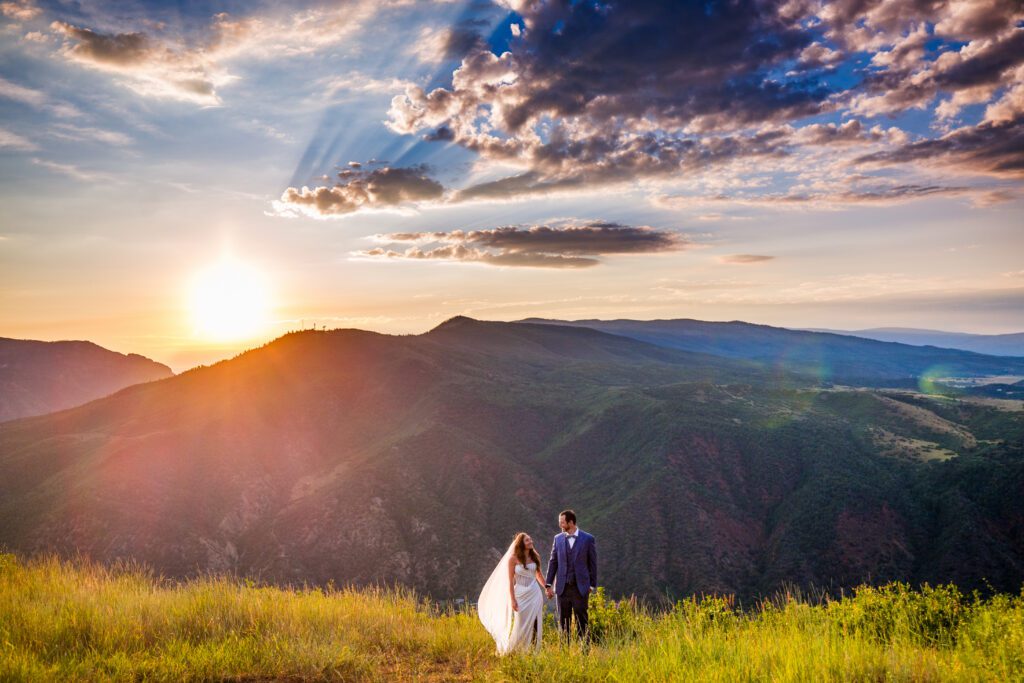
Private Summit near Glenwood Springs at Sunrise
The Elks: Aspen Valley and Crested Butte
With some of the most rugged and dangerous peaks in the state, the Elks are for those looking for a longer, more intense peak bagging adventure.
Accessibility:
The Elk Mountains, though some of the most photographed peaks in the state, are a little harder to get to. Many areas require advanced planning to secure parking passes, backpacking permits, and they all fill up incredibly quickly. There are peaks off some of the 4×4 roads in the area, but the roads are just as rugged as the peaks themselves. You can find a few gentler peaks and roads, but be prepared for larger crowds.
What Peaks are in the area:
When it comes to 14ers, the Elks hold the most dangerous and rugged summits in the State. The Maroon Bells are often referred to as “The Deadly Bells”. The 14ers in the Elk Range are only suggested for the MOST experienced hikers who are prepared for very long days with sustained scrambling and exposed climbing.
The smaller peaks in the area still require some advanced planning with private property lines on the Aspen side. Crested Butte does provide access to some peaks, or ridgelines that give that summit feel without having to hike a gnarly summit – but most will require a 4×4 vehicle. Scarp Ridge, Hasley Pass, and Treasury Mountain all have accessible hikes without needing the hiking experience that most of the Elks require.
What couples are best suited for an elopement in the Elks?
Unless you’re looking for a hike along Independence Pass or one of the smaller peaks along the Crested Butte side, the Elks should only be hiked by those with extensive hiking experience. These mountains are very difficult with notoriously rotten rock that crumbles easily. If you’re set on the Aspen or Crested Butte area for a summit elopement, there are some secret Local spots that may fit your needs.
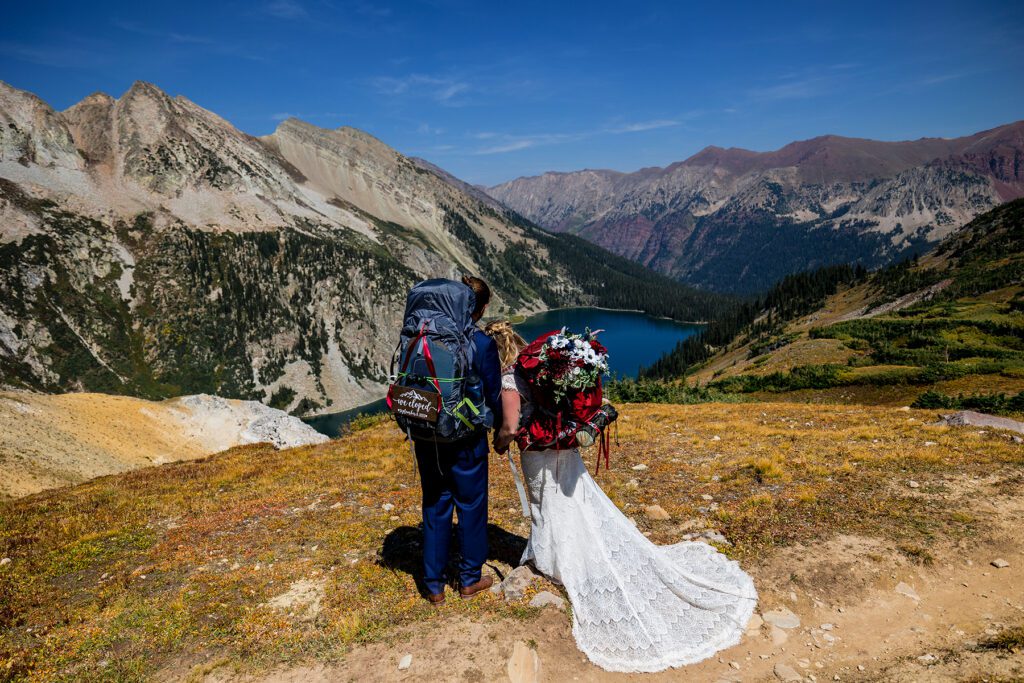
Topping out on TrailRider Pass near Snowmass Mountain
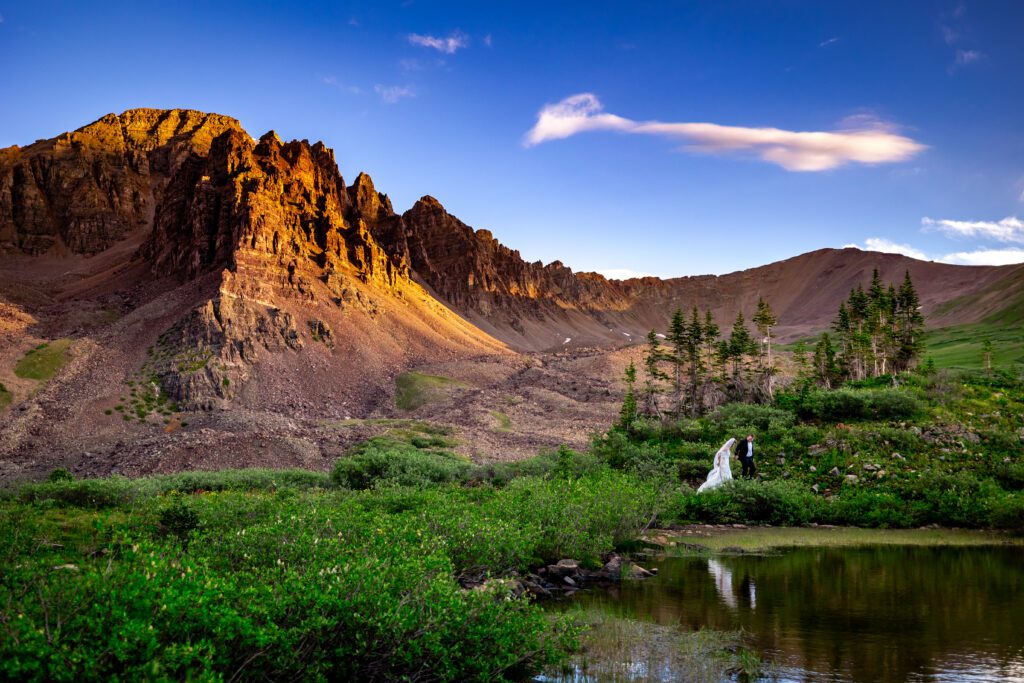
Beneath Electric Pass and Cathedral Peak at Sunrise
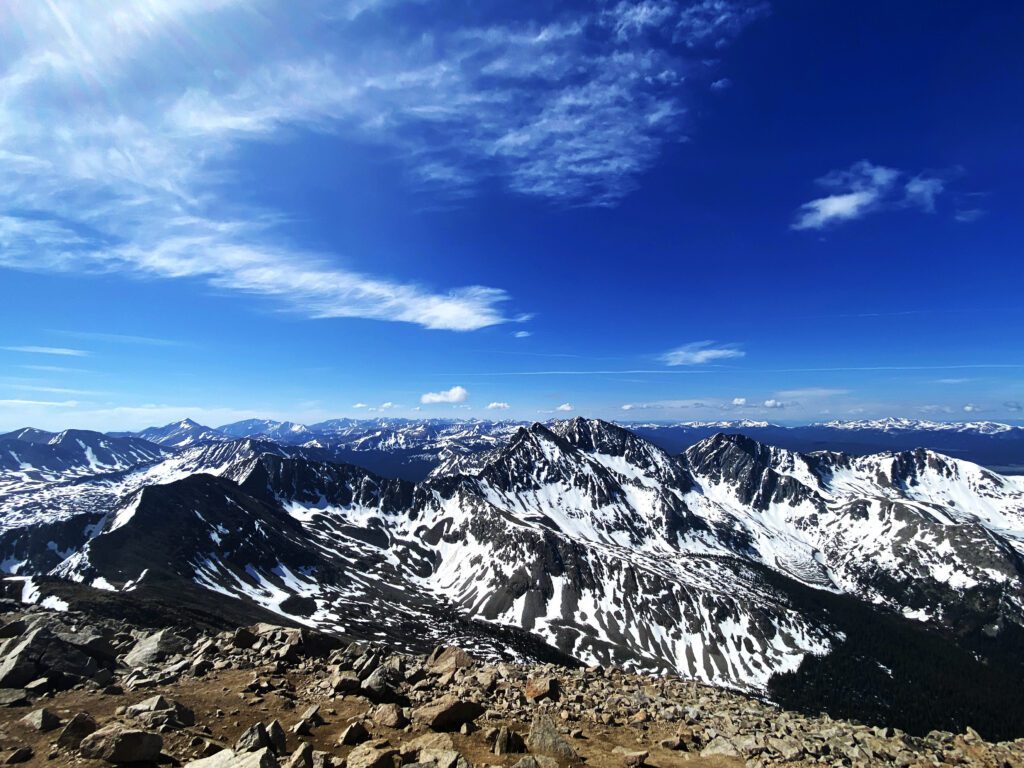
The summit of Huron Peak in early June
The Collegiates: A Peak Baggers dream
The Collegiates have the highest concentration of 14ers in the state of Colorado. This area is known for solid rock, wonderfully maintained trails, and endless mountain views.
Accessibility:
These are some of the most accessible 14ers in the entire state. Many, if not most, trails can be accessed with any vehicle. Some trailheads will have an upper trail where a 4×4 is highly recommended, but most can be driven to a reasonable starting point with a 2WD. Buena Vista and Leadville are the largest towns in the area for accommodations, and you can likely find everything from hotels to cabins and AirBnBs.
What Peaks are the the area:
The better questions is what peaks are NOT in the Collegiates. If the name of the 14er you’re looking at sounds very much like a University campus, it’s likely located in this area of the state. Some of the easier 14ers to hike, with the best bang for your buck when it comes to those mountain views as well, are Huron Peak, Mt. Yale, Mt. Princeton, and the state’s tallest peak Mt. Elbert. There are other peaks that are still considered Class 2, but have longer trails and much steeper summit pushes such as Harvard, Columbia, and Belford.
The smaller peaks in the area are often overlooked as there are so many 14ers, but there are just as many accessible peaks under 14,000′ that have the same crazy views. Hope Pass is widely known due to the Leadville 100 Race, and has some of the most iconic Colorado views – but you’ll put in your work to get up there.
What couples are best suited for an elopement in the Collegiates?
If you want to hike a 14er without a crazy drive, have a well maintained trail, and be surrounded by 360º views of peaks – the Collegiates are for you. I wish more couples would consider this area as it’s one of my personal favorites. You truly feel as if you are IN the mountains and not just looking out over them.
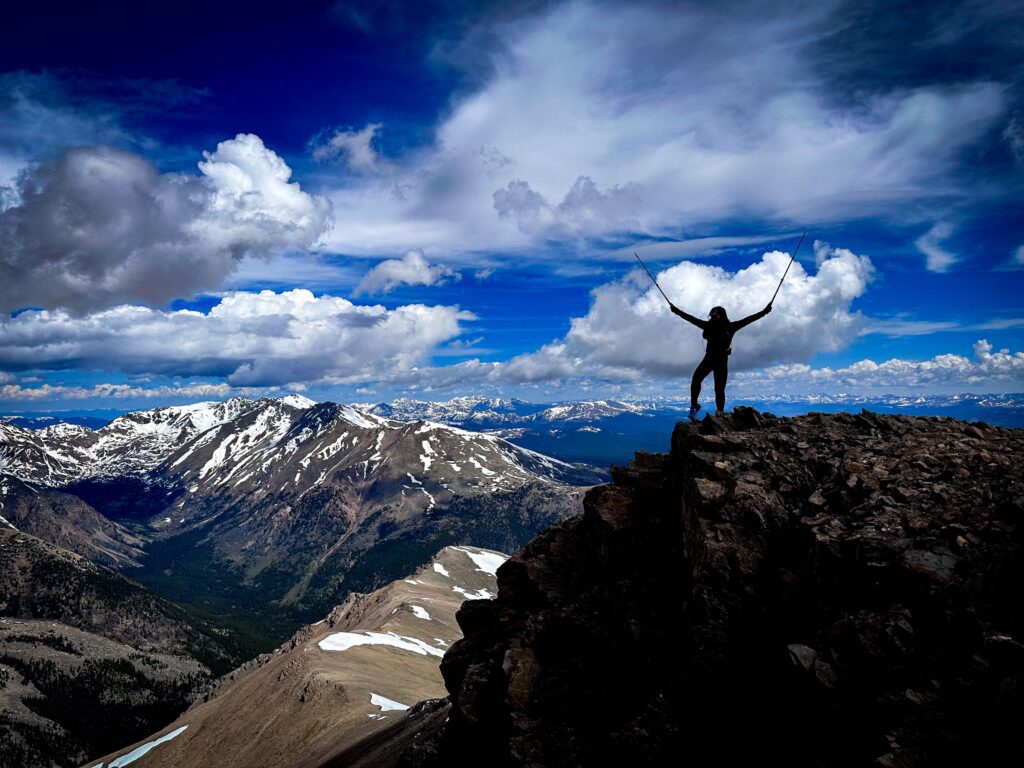
Near the summit of Mt. Elbert in late June
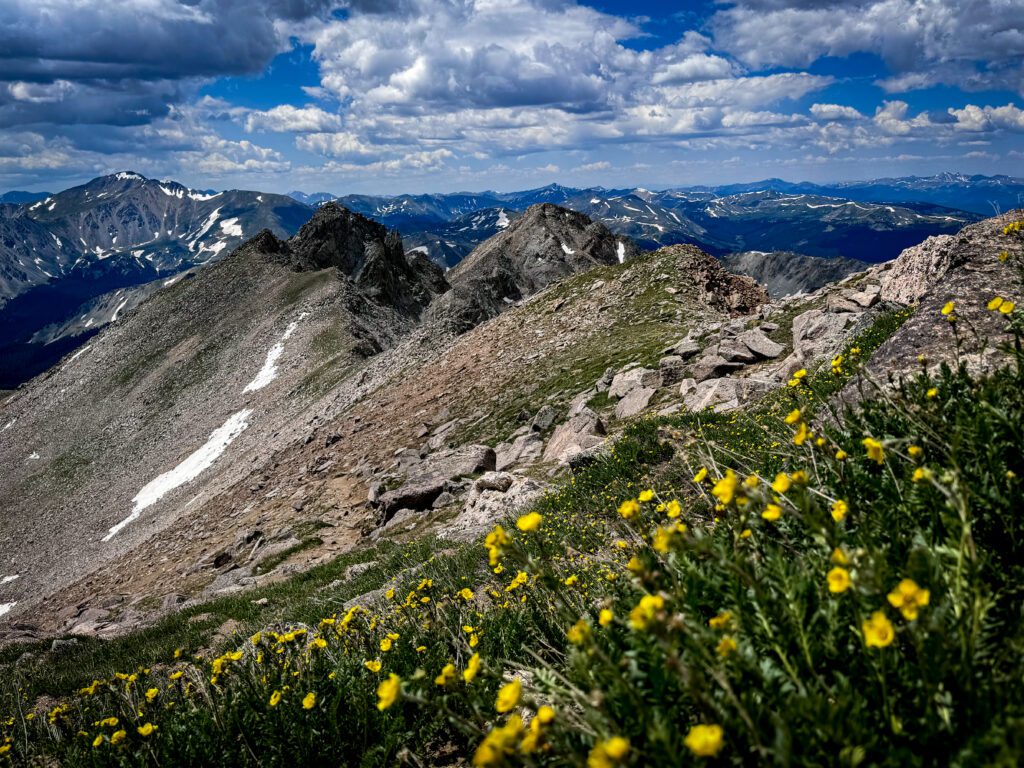
Near the summit of Harvard Peak in mid July

On the Mount Lindsey trail, mid August
The Sangre de Cristos: Solitude and Solid Rock
The Sangre de Cristo mountains are out there. The closest towns tend to be on the smaller side and the trails fairly remote. There is everything from rolling 12,000′ peaks to Class 4/5 climbs up gnarly 14ers.
Accessibility:
Getting to the Sangre de Cristo mountains means knowing the exact route you’re looking to take. The mountain range runs North to South – and you can access many peaks from either trails that begin on the Western side or the Eastern side. The trails tend to be longer and many require hiking either old 4×4 roads or trails that some insane people may call roads (ahem, Lake Como Road). One of the coolest things about this area is it’s near the Sand Dunes – which you should definitely check out regardless of where you chose to elope.
What peaks are in the area:
You can find two of Colorado’s “Grand Traverse” trails in the Sangres – two super exposed ridgelines that connect multiple 14,000 peaks and both reach class 5 climbing at one point. Not all the area’s peaks are this difficult, but most of the 14ers, with the exception of Humboldt, do require long days and Class 3+ hiking.
There are numerous summits that are below 14,000′ and much more accessible. From the Eastern side, you can access a plethora of 12,000-13,000 peaks off trails such as Music Pass and the Venable-Comanche loop. Though the trails are on the easy side technically, many are long with a decent amount of vertical gain.
What couples are best suited for an elopement in the Sangre de Cristos?
If you’re looking for a longer trek into a more raw and wild wilderness, the Sangres are for you. Even with the longer length for some peaks, many can be done in a single day if you’re an avid hiker and used to the physical demand of hikes in the 10-15 mile range (roundtrip). For those looking to car camp or backpack without the hassle of regulations and permits, the Sangres are the way to go.
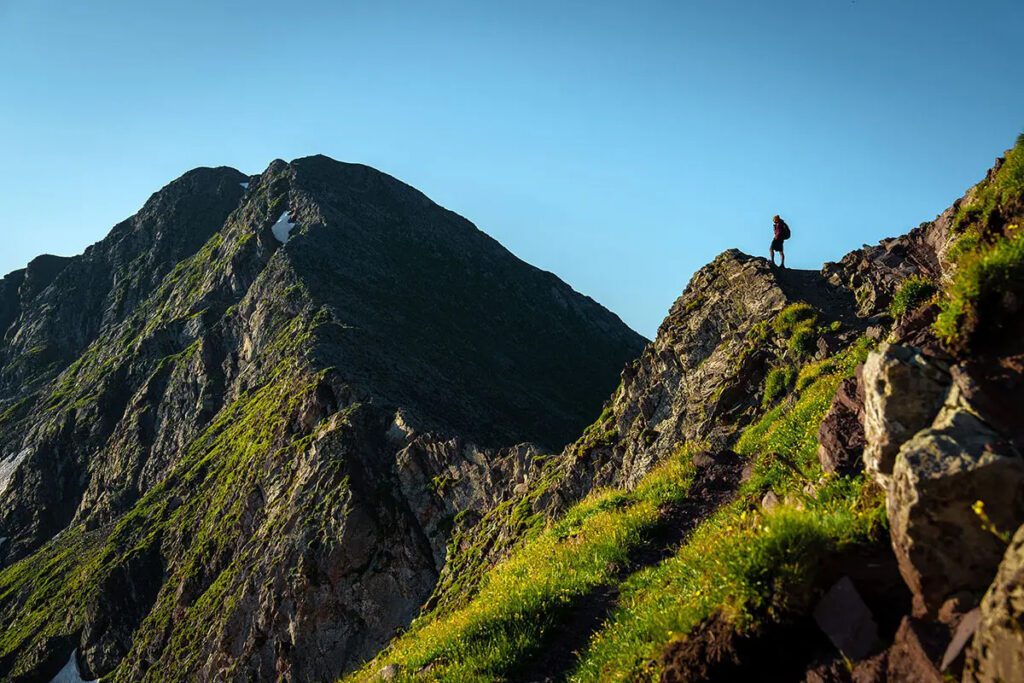
On the Phantom Terrace near Venable Peak, Late July
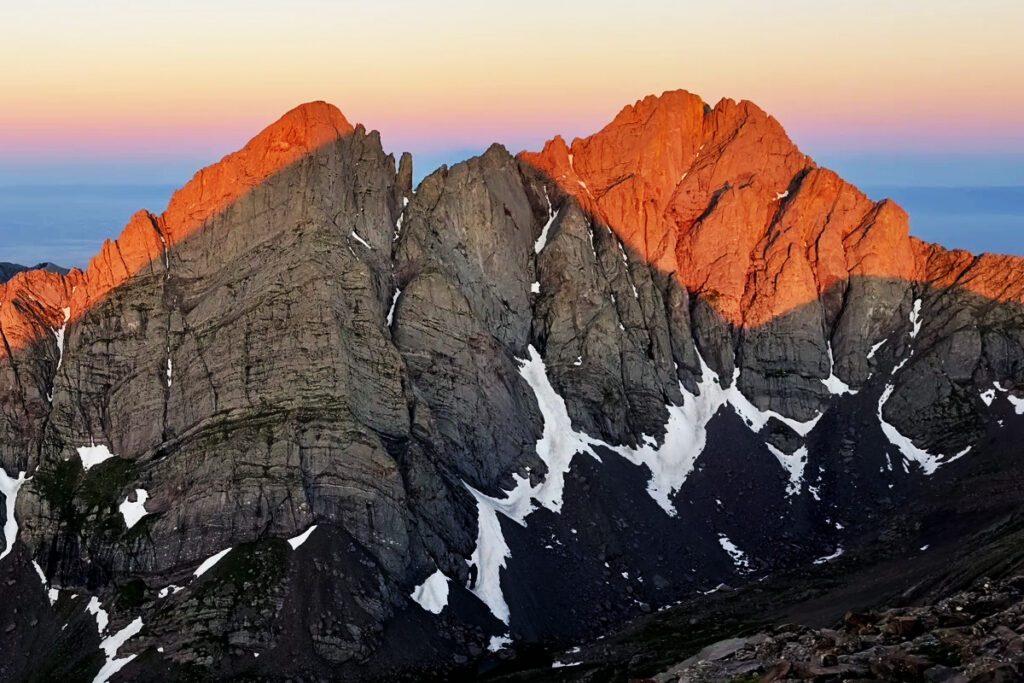
From the summit of Humboldt Peak at sunrise, Mid July
Planning and Logistics: How to prepare for your Summit elopement
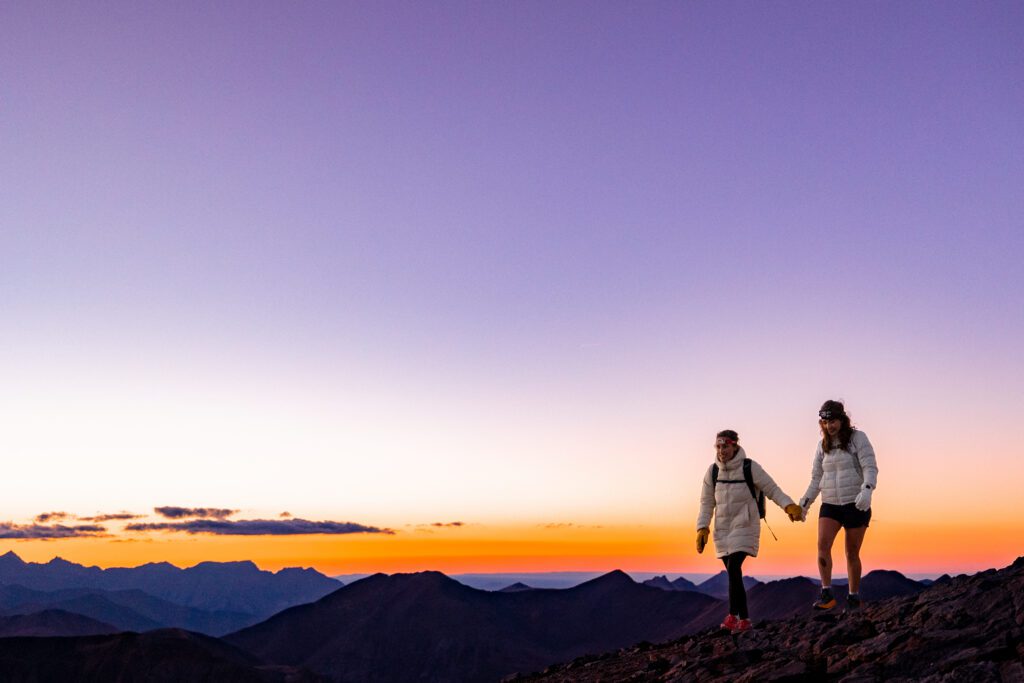
Hiking down from the summit of Handies Peak at Sunset in early September
Once you’ve selected the peak that’s perfect for you, it’s time to start getting into the nitty gritty.
Time of Day: Sunrise or Sunset
The best lighting is at sunrise and sunset, but which is best? It’s a well known saying in Colorado that for most of summer, be off the summit by Noon. We tend to have afternoon thunderstorms that roll in, and being above treeline is incredibly dangerous during a storm. To avoid this, sunrise is always my suggestion. There are rare days where sunset would work very well for a summit, but until September/October, they are few and far between.
If you have your heart set on Sunset, I highly suggest having your elopement in the fall months with the weather patterns settle.
Weather: What if the forecast sucks?
It’s not common to have a full day of terrible weather, but it certainly does happen. Typically, we do a weather check the week of your elopement to make sure that it’s safe to hike up.
If we do have unsafe weather (usually a system of thunderstorms rolling in), I’m always happy to see if there’s a date that mutually works to move our time together to. If this is a major concern of yours, be sure to let me know during our booking process as we can discuss the option of blocking off surrounding dates as backups.
With mountain elopements, having some flexibility is going to make your experience the best it possibly can be.
Officiant or Witnesses: Do we have to have someone come with us?
No! Can you bring both if you’d like? Absolutely. But Colorado does not require an officiant or witness for you to legally be married. You can Self-Solmonize (declare yourselves married) and sign your license legally just the two of you.
When bringing others, be sure to keep in mind things may take a little longer. Looking to bring your entire family? It can certainly be done depending on the mountain! Another way to include family or witnesses is to have everyone meet at the base of the hike once we’ve made our way back down the mountain for a family celebration.
Timing: How do we know what time to start hiking?
Remember that you’re going to have extra weight in your packs with your wedding attire/other items. Also, emotions can run high and/or the altitude may affect you. If possible, record a few hikes with similar elevation and gain per mile prior to your day to see where you normally are. Our guestimated start time has a few factors – sunrise or sunset, time of year, weather, and any of the other random things that may pop us. For sunrise, I tend to advise an average of 45 – 50 minutes per hour planned (especially for those last few miles). For sunset, we make our scenic stops on our way to the summit and thus will start much earlier to make sure we have ample time to capture all the scenery.
Permits: Do we need one?
The short answer? Possibly. Many summits are on Wilderness or National Forest land and thus do not require a permit with the passing of the Explore Act, however we may need parking reservations. Some peaks do require a commercial permit or special permission. Believe it or not, some peaks here are privately owned as well and require more planning and permitting.
If you’re wanting to avoid the hassle of permits and parking reservations, know that it’s likely we’ll be looking at more remote and lesser known peaks. The peaks and areas you’ve heard of or seen a million TikToks about (ahem, Maroon Bells) are going to be the hardest to gain access to.
Packing: Dress for the Adventure

A remote 13,000 peak in the Northern Mountains at Sunset in August
How do we bring our attire? Do we hike up in our wedding clothing? What do we definitely need regardless of weather forecast?
Brides: Dress, Flowers, and Packing
The Dress
Flowy gowns work incredibly well on mountaintops. We want to be sure you can still walk around at the summit, even if you decide to change up top.
The majority of brides I’ve photographed pack their dress and change at our destination. Where to change you ask? Wherever nature allows. Many summits do have a circular rock wind block, which makes for a wonderful place to change. If our trail is an easier one, I see many brides hike down in their gowns so we can take photographs as we hike back down the mountain. If we’re looking at scrambling, or a rough hike back, many will repack and then change once again when the trail smooths back out.
Another suggestion I make to all brides is to wear leggings under your gown. You’ll want that extra bit of leg coverage at 14,000 feet, as even when it’s “warm”, it’s going to be chilly.
Where do my Flowers go? What about Footwear?
Whoever is making your bouquet – wether it’s a florist or yourself/a friend, ask them to add a keyring to the ribbon that ties around the base. This will allow you to attach your bouquet to the outside or your pack via. Caribeaner without having to worry about smooshing it. Most bouquets will also fit in the mesh pocket on the outside of larger day packs.
When it comes to footwear – wear sturdy shoes on the trail. I’ve had brides pack heels to change into at our final destination, but be sure you have good shoes that you can hike and walk in on uneven surfaces.
How do I Pack my Gown?
My suggestion is to ROLL it (don’t fold, it creates large creases). Most dresses that are flowy tend to be naturally wrinkle resistant, where fabrics like silk or satin will show more of those creases. Once you’re all rolled up, gently place your gown at the top of your bag. If you’re bringing a larger pack (which most couples opt to do with the extra weight), place your gown in the head of your pack.
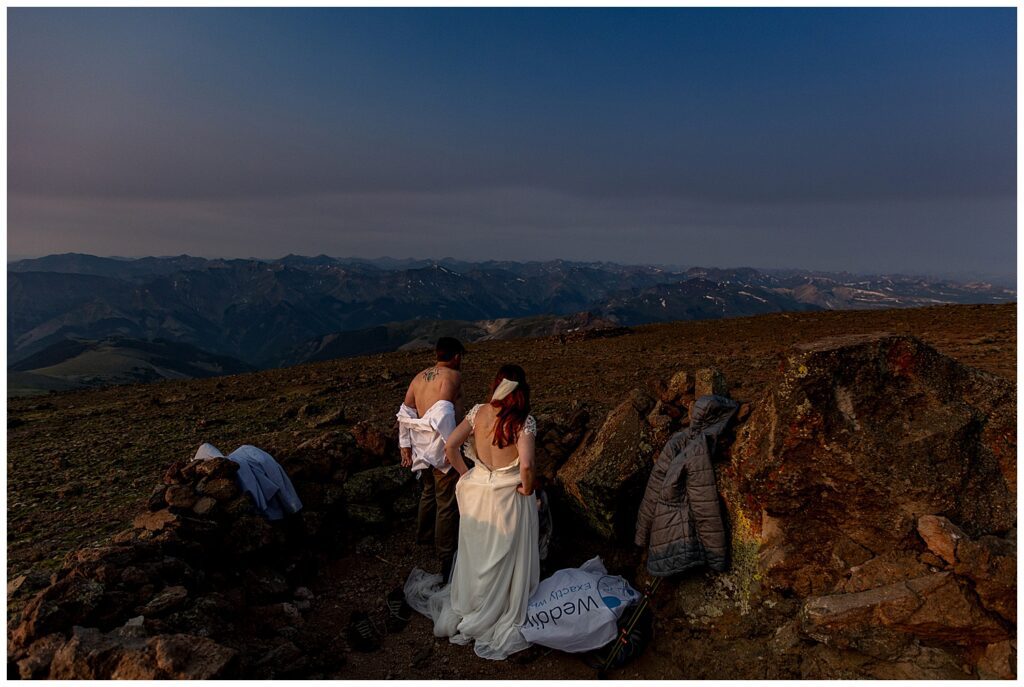
Getting ready on Uncompaghre Peak in Early July
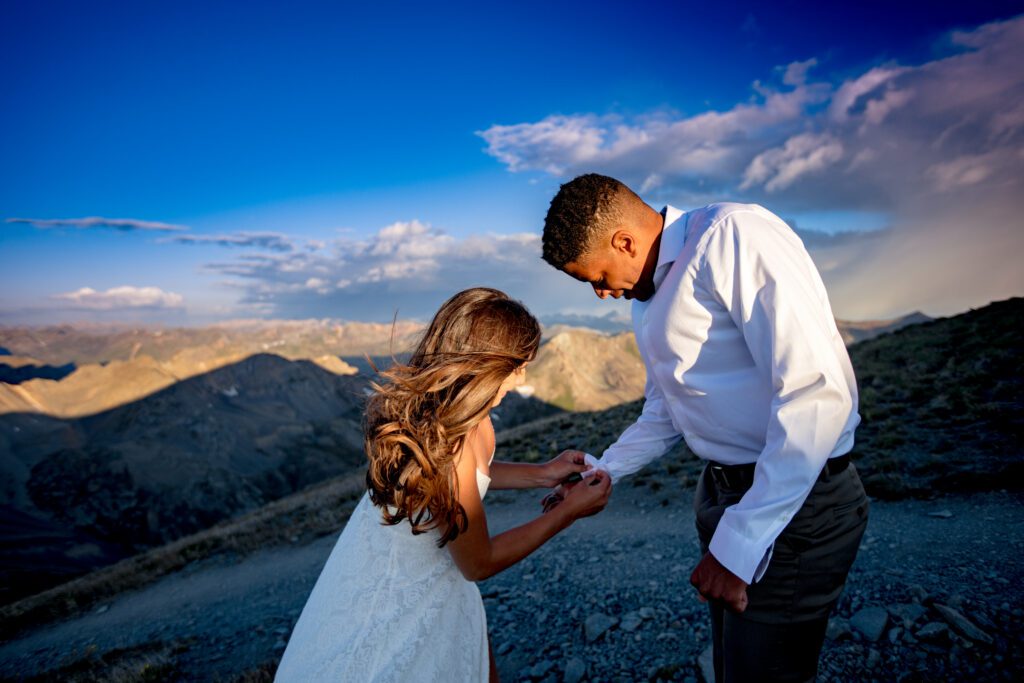
Getting ready on Handies Peak in Early July
Grooms: Suits and Shoes
The Suit
When considering what to wear, if you’re looking for warmth without adding bulk consider wool. A wool suit or vest can add that little bit of warmth without needing to layer on a coat.
A trend that has come about more recently that I am a HUGE fan of is wearing a colored suit. Maroons, Deep Greens, and patterned wool have been making an appearance the past few years, and I must say I absolutely love them.
The Shoes
Similarly to the women, be sure to have footwear that you can walk on steep and uneven ground on. Whoever designed mens dress shoes did not have walking on uneven terrain in mind. They are SLIPPERY, sometimes more so than women’s shoes that involve heels. I highly suggest having hiking boots/shoes for at least the hike up and down, or some men opt to wear their hiking boots as their main shoes.
How do I pack my Suit?
Unlike a gown, you don’t want to roll your suit into your pack. My suggestion is to clip your suit back to the outside of your pack. Be sure to add a caribeaner at the bottom as well so it doesn’t continutally bounce with each step that you take.
What should Everyone bring regardless?
Even if the weather looks nice, I recommend:
•Gloves, both lightweight and midweight
•Extra socks, especially if we have a river crossing
•More water than you think
•Electrolytes
•Food most certainly, especially CARBS
•Layers, including a good coat. Remember it’s going to be cold up top even on “warm” days.
•Hand and Foot warmers – the disposable ones work great
•A hair tie and bobby pins incase it’s incredibly windy
• My favorite: A bottle of bubble to pop up top
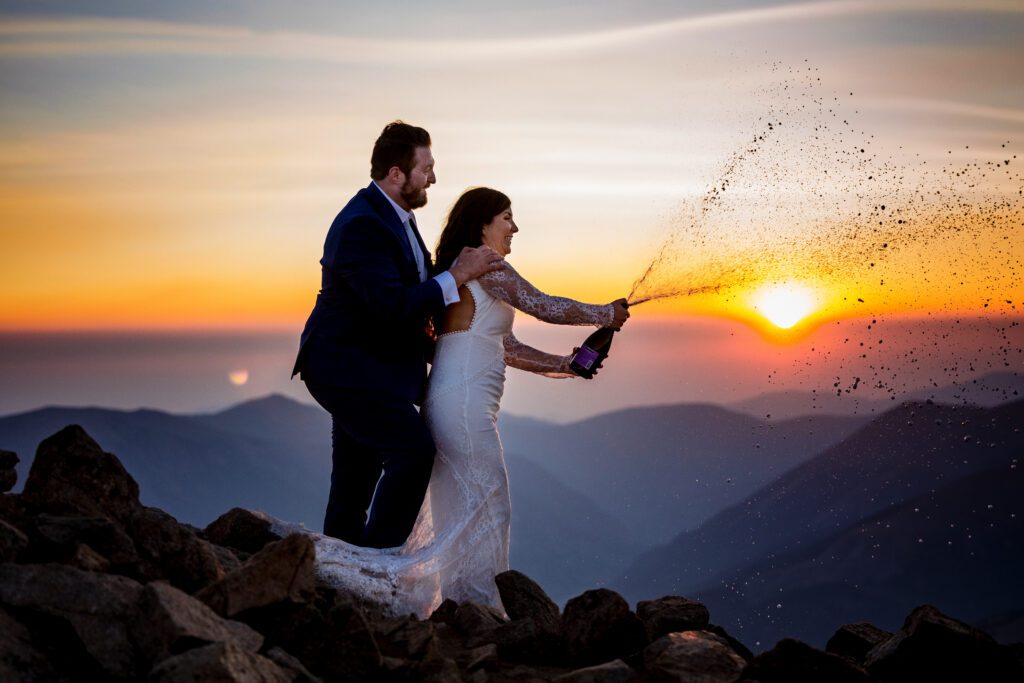
On the Summit of Sniktau at Sunrise, early September
The Meaningful Touches: Celebrating the way you want to
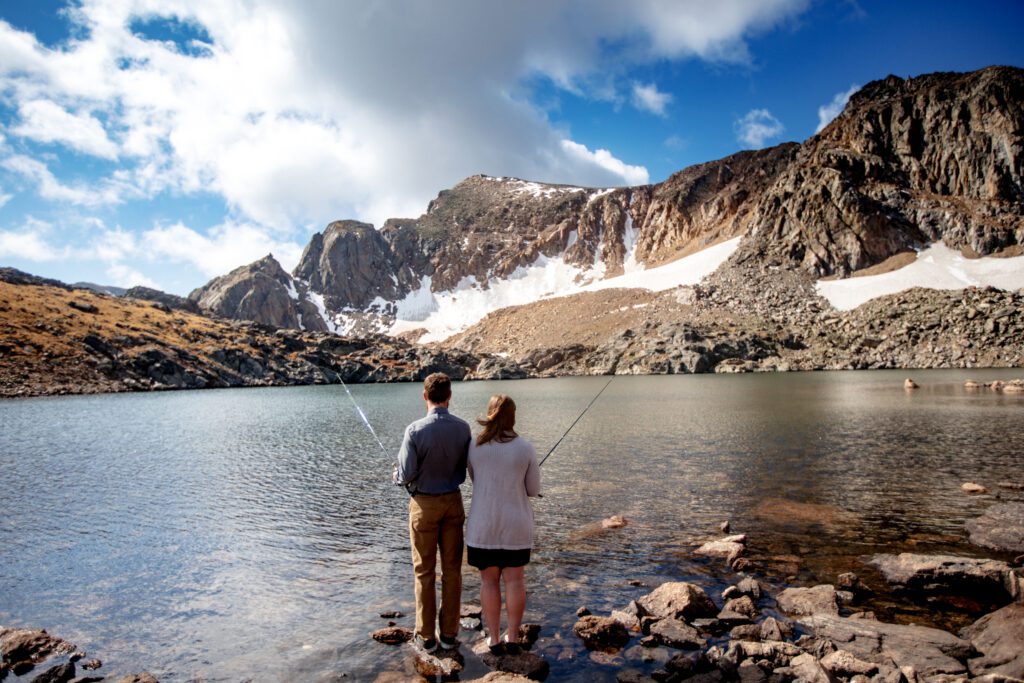
Alpine Lake Fishing beneath a remote 12,000′ Peak
What can we do on our hike? How can we add some activities or special and personal touches?
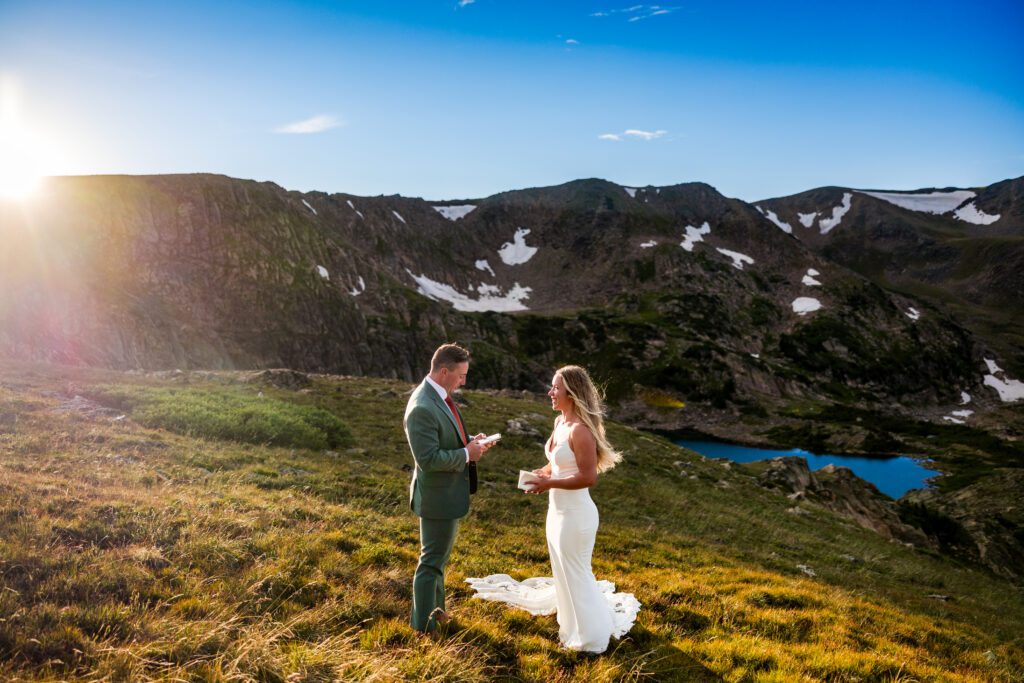
Handwritten Vows
You can either have them prewritten – in books, on fun and special paper, or an item that has special meaning to just the two of you. Are you wanting to write your vows the morning of, with the mountains as your inspiration? We can certainly do that as well! Just be sure to pack a pen, and not right next to your wedding attire.
Letters from Loved Ones
Eloping just the two of you, but want to include your family and friends? I’ve had couples ask their loved ones to write a note/paragraph for them to read together on their elopement day. I’ve seen handwritten notes by parents, printed out Emails that everyone sent, and as extravagant as a handmade book with photos and letters. Just remember a book does add extra weight, where as printed paper will weigh significantly less.
Traditions you want to Include
Just because you’re eloping doesn’t mean that you can’t include any of the more traditional elements of a wedding if you’d like!
Have a first dance under the stars or at a lake – just be sure to download the song you’d like to use as service may not be available
Spray some champagne and toast one another. If you have friends with you, you can have informal toasts or words of love and encouragement.
Bring a dessert to share together! Food is always amazing on the top of a mountain.
Create your Own Tradition
A little less on the traditional side, more on the super fun and adverterous side.
Take a paddle out on the lake near the base of our hike. Or perhaps a kayak is more your style.
Jump in the lake, or walk a little bit into the water if jumping in isn’t your thing.
Bring a fishing pole and try to catch some fishies together.
I’ve had couples crush their cans after a toast and attach them onto their pack to hike down with for “Just Married” decoration.
General Advice for Hiking 14ers and Larger Mountain Summits
A few final tidbits to help plan your Hiking elopement that I’ve learned over the years as an Adventure elopement photographer.
The altitude is real. Don’t underestimate it. If you can aclimate a few days prior to your elopement, you’ll likely feel better.
Drink electrolytes. Water its self is not enough when you’re going to be exerting a ton of energy. Start drinking electrolytes a few days before heading to Colorado, or a few days before your elopement if you’re local.
Food. Food is very important. Eat the morning of your elopement, even a piece of toast. Eating the night before is not the same as the day of. Have snacks for the way up the trail, not just at the top of the summit.
Don’t overpack if you can. The weight can become a lot with a long day, try to leave things we won’t use at home.
Be flexible. The best hiking elopement days are when we have a good time, enjoy the scenery, and remember you get to spend your wedding day hiking with your partner.
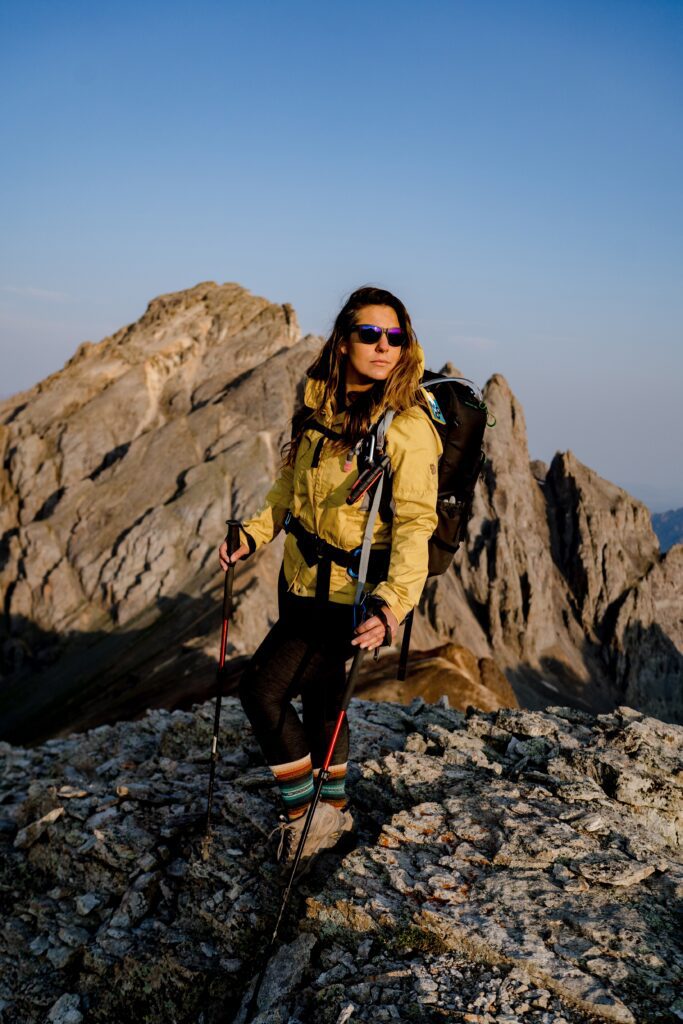
On the Summit of V2 in late August
I can’t wait to adventure with you out in the Alpine.
Looking for help planning your 14er or Mountain Summit wedding? Reach out and I’ll be happy to help with locations, planning, and logistics!
Happy Hiking 💛